WHO IS QUALIFIED TO VOTE; ARE YOU? Written by KEMKA S. IBEJI
 |
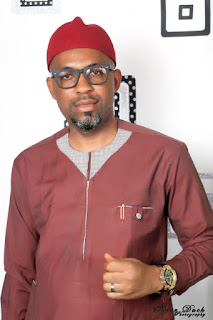
| KEMKA S. IBEJI |
A greater percentage of the Nigerian electorate are not qualified to vote in an election. They're not different from infants and lunatics who can't make informed decisions. They're either swayed by monetary inducement, tribal and religious sentiments or bandwagons informed by fear of supporting someone that'll fail. Instead of making choices on solid and enlightened resolutions.
The history of democracy and indirect or representative democracy especially is replete with stringent measures considered in putting forward those who will choose their representatives. At a time in its evolution, women weren't allowed to vote and weren't even regarded as citizens. That was at its very crude stage.
Subsequently and an advanced democracy restricted infants and lunatics from participating in an election. Of course, the most important aspect of an election is the voting which defined someone as a member of the community. Those who can't vote weren't seen or regarded as citizens at some point. But infants and lunatics enjoyed membership of the society but weren't permitted to vote.
Why was the restriction on infants and lunatics from voting?
Voting is a respected activity of the citizenry which allows the people to choose who will lead them. That choice is everything and requires certain foundational features, characteristics and qualities that qualifies one to be part of it.
The major characteristic of a voter is that he or she must be knowledgeable. A voter must be able to think independently and not influenced by inanities and frivolities. Every voter should be informed of the society, the situations, predicaments, characters and competence of the society and the candidates. A voter must be someone of integrity who should follow knowledge and not emotion.
These qualities denied infants and lunatics the right to either vote or be voted for.
Now let's assess our current voters upon these outlined qualities and adjudge them as either qualified or otherwise.
What are the things that determine the decisions or choices of current day electorate? Ask yourself this question and answer it. Also try to ask people around you the same question and get the answers, then you can understand our problem as a country.
Why do you choose to vote the aspirants or the candidates that you're currently supporting or have supported in the past? Let's highlight some of the known influences to help our readers in answering the question;
1. The candidate is from your tribe or ethnic group?
2. The candidate is of the same faith with you - a fellow Christian, a fellow Muslim, a fellow Catholic or member of your denomination?
3. The candidate is a philanthropist who has helped many people in several ways?
4. The candidate is wealthy?
5. The candidate paid you some money to vote for him or her? At least a bird at hand is worth more than a thousand in the air.
6. The candidate speaks well and sounds tough?
7. The candidate controls the Army, the police and other organisations and can protect our votes?
8. The candidate is a good person but will not win because he or she is not in a popular political party? I don't want to waste my vote.
9. The candidate speaks to the realities of the society and understands the problems?
10. The candidate is well exposed in both education and experiences that he has the wealth of knowledge required to better the society?
11. Etc.
Assuredly, if your decision and choice of candidates are informed or influenced the earliest reasons then you're clearly not qualified to vote in an election. Unfortunately, over 80% of our voters are making their choice of candidates based on those weak and non qualifying reasons.
Why should you vote someone you know is not the best because he has money or controls powers to rig the elections or has money to share or is in the popular political party when you know someone readily available on the ballot who will bring home the dividends of good governance? Why must you vote someone because the good man or woman won't be able to get the ear of enough members of the electorate to win the election? Why would you prefer to be in the crowd where your choice means nothing instead of standing on your conviction, principle, ambition and vision for a better society through good governance?
Why must being a member of your religion, tribe, ethnic group and suchlike be a deciding factor for your choice of candidates instead of your conviction that such a candidate has the requisite knowledge, experience, skills, ability and capacity, character and competence, altruism and empathy to lead the society?
These are the crying questions and the disturbing realities of our electoral premises that have kept our electoral successes on her knees. The truism therefore is that the majority of our voters are not worthy of participating in an election and are the heavy distractions to the attainment of electoral essences.
I am,
KEMKA S. IBEJI
A Political Thinker


Comments
Post a Comment